

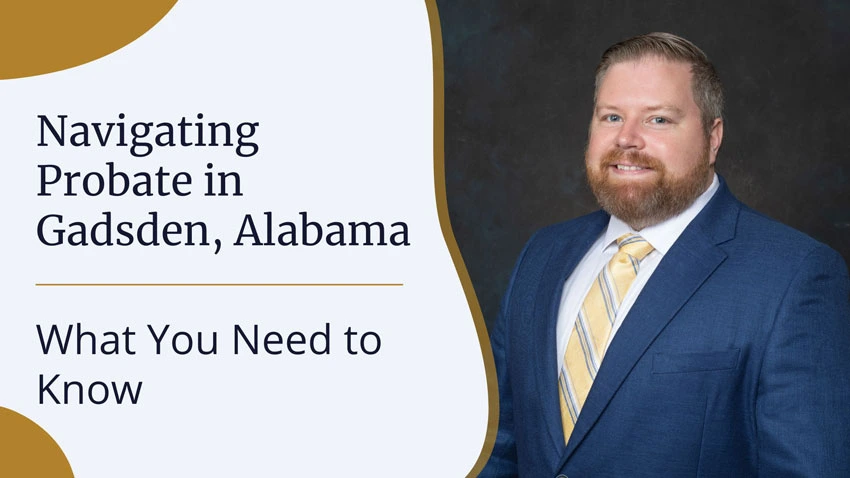
When a loved one passes away, families are left not only with grief but also with the responsibility of handling their estate. In Gadsden, Alabama, this often means going through probate court—a process that can feel overwhelming without legal guidance.
At Jones For Justice, Attorney Joseph Andrew Jones helps families across Etowah County understand probate, settle estates, and avoid unnecessary stress. Here’s a complete guide.
What Is Probate?
Probate is the legal process of managing and distributing a person’s estate after they die. The probate court ensures:
- The deceased’s debts are paid.
- Assets are distributed according to their will or Alabama intestacy laws (if there’s no will).
- Legal disputes among heirs are resolved.
Learn more about our Probate Law Services.
Does Every Estate in Alabama Go Through Probate?
Not always. Some assets pass outside of probate, including:
- Life insurance with a named beneficiary.
- Retirement accounts (IRA, 401k) with a beneficiary.
- Jointly owned property with rights of survivorship.
However, if the deceased owned property solely in their name—or left significant assets—probate is usually required.
The Probate Process in Etowah County
- Filing a Petition – A family member or executor files paperwork in Etowah County Probate Court to begin the process.
- Appointing an Executor or Administrator – If there’s a will, the named executor oversees the estate. If not, the court appoints an administrator.
- Notifying Creditors and Heirs – The estate must formally notify creditors and family members.
- Inventorying Assets – All assets (real estate, bank accounts, personal property) are listed and valued.
- Paying Debts and Taxes – Debts, medical bills, and taxes must be paid before heirs receive assets.
- Distributing Assets – Remaining property is distributed according to the will—or, if none, under Alabama intestacy law.
Resource: Alabama Probate Code – Title 43
Common Issues in Probate Cases
- Will Contests – Disputes over validity of a will.
- Executor Misconduct – Concerns about how an executor manages the estate.
- Family Disputes – Disagreements among heirs about distribution.
- Complex Assets – Businesses, farms, or multiple properties that need careful handling.
These issues can prolong probate—sometimes for months or even years—without skilled legal help.
How Long Does Probate Take in Gadsden?
The timeline depends on the complexity of the estate.
- Simple cases – 6–9 months.
- Contested estates – 1–2 years (or longer).
Having a probate attorney in Etowah County can speed things up and prevent costly mistakes.
Planning Ahead: Avoiding Probate
While probate is sometimes unavoidable, careful planning can make the process easier:
- Living Trusts – Allow assets to pass directly to heirs without court involvement.
- Joint Ownership – Ensures property automatically passes to the surviving owner.
- Beneficiary Designations – Keep retirement accounts, insurance, and bank accounts outside probate.
- Advance Planning – A properly drafted will and estate plan reduce disputes.
Related: Real Estate Law Services
Why Hire a Probate Lawyer in Gadsden?
Handling probate without guidance can lead to:
- Missed deadlines.
- Mishandled assets.
- Family disputes escalating into lawsuits.
With Jones For Justice, you benefit from:
- Local Experience – We know how Etowah County Probate Court operates.
- Comprehensive Knowledge – From wills to real estate transfers, we handle it all.
- Compassionate Support – Probate comes during emotional times—we guide you with care.
- Efficient Resolution – Our goal is to settle estates quickly and correctly.
Conclusion: Probate Made Easier in Etowah County
Probate doesn’t have to feel overwhelming. With the right attorney, you can navigate the process smoothly, protect your loved one’s legacy, and reduce stress for your family.
At Jones For Justice, we serve clients across Gadsden and Etowah County, handling probate, estate administration, wills, and trusts with skill and compassion.
Call us at 256-222-7777 or visit our Contact Page to schedule a consultation.